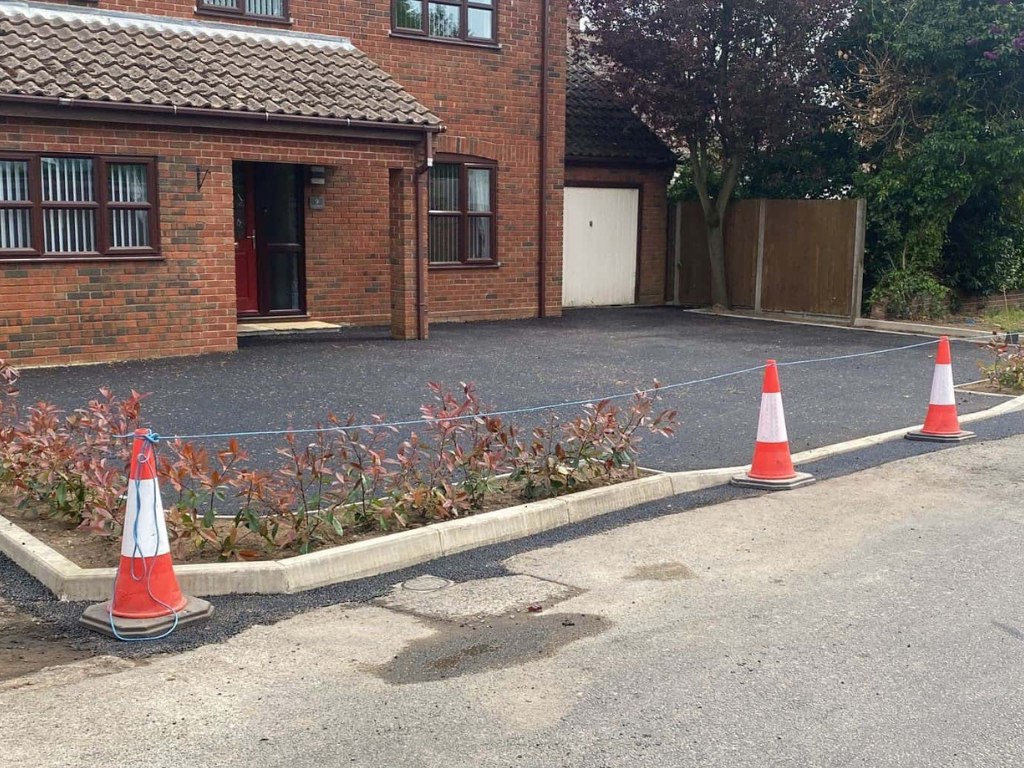
How Can a Resin Driveway Improve the Appearance and Practicality of Your Property?
A driveway is one of the most frequently used external areas of a property. It needs to provide dependable access for vehicles and pedestrians while also contributing positively to the overall appearance of the entrance. When an existing driveway becomes worn, uneven or visually tired, replacing or upgrading the surface can make a noticeable difference to how the entire frontage looks and functions.
For homeowners in Reigate, Surrey, a professionally installed resin driveway can provide a clean, consistent surface that combines attractive presentation with everyday practicality. Resin surfacing can work particularly well where homeowners want to improve an ageing entrance, create clearer parking areas or achieve a more unified finish across the front of the property.
However, the quality of a resin driveway depends on considerably more than its appearance. Base condition, preparation, drainage, levels and edge details all influence how effectively the finished surface performs. Considering these elements together is essential when creating a driveway intended for regular use.
Why Can a Resin Driveway Be a Practical and Attractive Property Improvement?
A resin driveway can improve a property by replacing a worn or inconsistent entrance with a smoother, more cohesive surface that is suitable for regular vehicle and pedestrian use.
Its continuous finish can complement different driveway shapes and create a clearer visual connection between parking spaces, access routes and surrounding garden features.
The practical benefits are strongest when the resin surface is installed over a stable, properly prepared foundation. A quality finish cannot compensate for significant weaknesses beneath it, which is why professional preparation is such an important part of the installation.
A Driveway Has a Major Visual Impact on the Property
Driveways often occupy a substantial proportion of the space in front of a property.
When the surface contains numerous repairs, cracks, uneven sections or areas made from different materials, the entrance can appear fragmented.
A new resin surface can create a much more unified appearance.
Instead of attention being drawn towards individual defects, the driveway becomes a consistent part of the wider property frontage.
Resin Surfacing Creates a Continuous Finish
One of the main visual characteristics of resin surfacing is its seamless appearance.
The aggregate and resin form a continuous layer rather than being divided into large individual paving sections.
This can help create clean visual lines across the driveway and works particularly well where the layout includes curves, changes in width or irregular boundaries.
The result can make the driveway feel more intentionally designed rather than simply functioning as somewhere to park.
A Consistent Surface Can Transform a Tired Entrance
Older driveways can gradually lose their original appearance.
Previous repairs may become visible, different sections can wear at different rates, and general weathering can leave the entrance looking tired.
Resurfacing provides an opportunity to approach the area as a complete driveway rather than continuing to treat individual sections.
Where the underlying construction remains suitable, resin surfacing can create a much fresher and more consistent finish.
The Driveway Can Complement the Property Rather Than Dominate It
A good driveway design should work with the surrounding property.
The aggregate finish can be selected to create an appropriate relationship with the exterior of the building and nearby landscaping.
The objective does not need to be creating an elaborate entrance.
Often, a restrained and consistent surface provides the strongest result because it allows the driveway to appear well integrated with its surroundings.
Resin Can Work With Different Driveway Shapes
Not every driveway is rectangular.
Some entrances narrow towards the road, widen into parking areas or contain curved edges around lawns and planting.
Because resin surfacing is installed as a continuous layer, it can follow these different shapes effectively.
This provides flexibility when improving an existing driveway without forcing the layout into an unnecessarily rigid design.
Defined Edges Can Improve the Overall Appearance
The perimeter of a driveway contributes significantly to how finished the installation looks.
Clear edge details create separation between the driveway and surrounding garden areas.
They can also help define curves, entrances and changes in layout.
Professional installation considers these edges as part of the complete design rather than treating them as an afterthought.
Practicality Begins Beneath the Surface
Although the resin finish is the part homeowners see every day, the construction underneath is fundamental to its performance.
A driveway used by vehicles needs a stable foundation capable of supporting repeated loading.
If the base is unsuitable, movement beneath the resin layer can eventually affect the visible surface.
This is why proper assessment and preparation are essential before resin is installed.
Existing Driveways Should Be Assessed Before Resurfacing
An existing driveway may sometimes provide a suitable foundation for resin surfacing, but this should not simply be assumed.
The condition of the surface needs to be assessed.
Significant cracking, movement, settlement or unstable sections can indicate problems that should be addressed before the new finish is applied.
Covering substantial defects without understanding their cause can allow them to influence the new surface later.
Resin Should Not Be Used to Hide Structural Problems
A visually attractive finish cannot correct an unstable driveway beneath it.
If an existing surface is moving, badly cracked or sinking, applying resin over the top does not remove the underlying cause.
Appropriate preparation may involve correcting unsuitable areas before the final surface is installed.
This approach creates a more reliable result than using the resin layer simply to conceal existing deterioration.
Ground Preparation Influences Long-Term Performance
Where more substantial preparation is required, the ground and base need to be constructed appropriately for the intended use.
Compaction is particularly important.
Poorly compacted areas can settle differently over time, potentially creating uneven sections.
A carefully prepared foundation helps distribute vehicle loads more consistently and supports the resin surface above.
A Smooth Finish Can Improve Everyday Access
An uneven driveway can be inconvenient for both vehicles and pedestrians.
Depressions, loose materials and abrupt changes in level can make the entrance less comfortable to use.
A properly prepared resin driveway provides a relatively smooth and consistent surface.
This can make everyday movement between parked vehicles and the property more straightforward.
Resin Avoids the Movement Associated With Loose Aggregate
Loose stone can provide an attractive driveway finish, but repeated vehicle movements can redistribute the material.
Tyres may push stones towards the edges or create thinner areas where vehicles regularly travel.
With resin bound surfacing, the aggregate is mixed with resin and forms a bonded surface.
This helps maintain a more consistent finish across the driveway rather than requiring loose material to be repeatedly redistributed.
Parking Areas Can Feel Better Defined
A driveway that has evolved gradually over time can sometimes lack a clear layout.
Different materials or worn sections may make parking areas feel disconnected from the main entrance.
A continuous resin finish can visually connect these areas.
Where appropriate, the design can create a clearer relationship between vehicle access, parking and pedestrian routes.
Vehicle Turning Areas Need Suitable Construction
Sections where vehicles regularly turn can experience additional demands.
Tyres place different forces on the surface when steering compared with travelling in a straight line.
These areas therefore need suitable support beneath the finished resin.
Understanding how vehicles normally enter, manoeuvre and leave the driveway can help inform the preparation and overall construction.
Driveway Entrances Experience Frequent Use
Every vehicle movement passes through the entrance.
This can make it one of the most heavily used parts of the driveway.
Transitions need to be carefully considered so vehicles can move comfortably between adjoining surfaces.
Strong edge details and appropriate preparation are particularly important in these frequently trafficked areas.
Good Levels Improve Both Appearance and Function
A driveway with inconsistent levels can look uneven and create practical difficulties.
Low areas may collect water, while abrupt transitions can affect vehicle and pedestrian movement.
Levels should therefore be considered during preparation rather than attempting to correct them using the finishing layer.
A well-planned foundation helps the resin surface follow an appropriate profile across the entire driveway.
Drainage Is an Essential Part of Driveway Design
A practical driveway needs to manage rainfall effectively.
Water should not simply be allowed to collect in poorly planned low points.
The appropriate drainage approach depends on the construction of the driveway and surrounding site.
Considering drainage before installation allows levels, base materials and the finished surface to work together rather than treating water management as a separate issue afterwards.
Resin Bound Surfacing Can Offer Permeable Characteristics
Resin bound surfacing contains small interconnected spaces within the finished mixture that can allow water to pass through the surface.
However, the complete construction needs to be suitable if permeability is intended to form part of the drainage strategy.
The visible resin layer cannot provide a fully effective permeable solution if the materials beneath are incompatible with that approach.
Professional installation therefore considers the complete driveway build-up.
Good Drainage Can Help Avoid Persistent Ponding
Persistent standing water can affect the practicality and appearance of a driveway.
Appropriate levels and drainage arrangements help manage rainfall rather than allowing it to remain unnecessarily on the surface.
Where an existing driveway already contains areas of ponding, the reason should be investigated before resurfacing.
Simply covering a depression does not necessarily correct the underlying level.
Resin Driveways Can Connect Vehicle and Pedestrian Areas
The front of a property is rarely used exclusively by cars.
People regularly walk between vehicles and entrances, move bins or equipment across the surface and use the driveway as a general access area.
A consistent resin finish can accommodate this mixed use effectively.
Where paths and parking areas meet, the continuous surface can also help create a more cohesive overall layout.
A Cleaner Layout Can Make the Frontage Feel More Organised
Improving a driveway is not only about changing the material.
A new installation provides an opportunity to consider how the available space is being used.
Clear boundaries, sensible parking areas and appropriate pedestrian access can make the frontage feel more organised.
Resin surfacing can then provide the consistent finish that brings these different areas together.
Curved Boundaries Can Be Incorporated Naturally
Some properties benefit from softer driveway boundaries rather than completely straight edges.
Curves may be used around lawns, planted areas or other existing features.
Resin surfacing can accommodate these shapes effectively because it is laid continuously within the prepared boundaries.
This can help the driveway feel integrated with the wider garden rather than appearing visually separate from it.
Existing Features Can Often Be Considered Within the Design
A driveway improvement does not necessarily mean changing every part of the surrounding frontage.
Where existing boundaries or garden features remain suitable, the driveway can be designed in relation to them.
The aim should be to improve the surface and functionality while retaining features that continue to work well.
This can produce a more balanced result than redesigning the entire area unnecessarily.
A New Surface Can Remove the Patchwork Appearance of Repeated Repairs
Driveways that have been maintained for many years can develop numerous visible repair areas.
Although each repair may have served an important purpose, the combined appearance can eventually become inconsistent.
Where the underlying driveway remains suitable for resurfacing, a new resin finish can provide greater visual continuity.
However, previous repairs should still be assessed to make sure they do not indicate unresolved movement beneath the surface.
Cracks Need Investigation Before Resin Is Installed
Cracking should not automatically be hidden beneath a new driveway finish.
The significance depends on why the crack developed and whether movement is continuing.
A small stable defect presents a different situation from widespread cracking caused by an unstable base.
Professional assessment helps determine what preparation is required before the resin layer is installed.
Sunken Sections Need More Than a Cosmetic Covering
If part of an existing driveway has settled, the affected section should be investigated.
Applying resin across the depression may leave the underlying problem unresolved.
Suitable preparation should establish appropriate levels and address unstable areas before the finishing layer is added.
This demonstrates why a high-quality resin driveway begins with groundwork rather than the decorative surface.
Edge Stability Supports the Finished Driveway
Edges are both a visual and practical part of the installation.
They create a clear perimeter and help maintain the relationship between the resin surface and surrounding areas.
Where vehicles regularly travel close to an edge, appropriate construction becomes particularly important.
Well-planned boundaries contribute to the finished appearance while supporting the overall driveway layout.
Resin Surfacing Can Provide a Low-Clutter Appearance
Some driveway materials naturally create strong patterns or visible joints.
Resin provides a more continuous appearance.
For homeowners seeking a straightforward, uncluttered entrance, this can be particularly effective.
The aggregate still provides visual texture, but the surface itself remains cohesive across larger areas.
Maintenance Remains Important
Resin driveways should not be described as requiring no maintenance.
Like any outdoor surface, they are exposed to leaves, soil, organic material and general contamination.
Regularly removing debris and carrying out appropriate cleaning when required can help maintain the surface.
Keeping the driveway clear also makes it easier to identify localised areas that may require attention.
Keeping the Surface Clear Supports Its Appearance
Leaves and other debris can accumulate around parked vehicles and driveway edges.
If left for extended periods, organic material can affect the clean appearance of the surface.
Routine maintenance prevents unnecessary build-up and helps retain the consistent finish that makes resin surfacing attractive in the first place.
Localised Problems Should Be Investigated Rather Than Ignored
If a section of a resin driveway changes, cracks or becomes uneven, understanding the cause is important.
The visible defect may be confined to the surface, but it can also originate from movement beneath it.
Early assessment helps determine whether the problem is genuinely localised.
This cause-based approach is more useful than repeatedly treating the appearance without understanding why the defect developed.
Resin Driveways Can Be Designed Around Everyday Use
The best driveway is one that works for the household using it.
Before installation, it is useful to consider:
- How many vehicles normally use the driveway
- Where vehicles are parked
- Where turning commonly occurs
- How pedestrians reach the property
- Which areas experience the most frequent traffic
- Where clear boundaries are needed
- Whether existing levels require correction
- How rainfall will be managed
- Which surrounding garden features are being retained
These practical considerations can influence both the construction and final layout.
Appearance and Practicality Should Be Planned Together
A driveway can look attractive but still be frustrating to use if the layout, levels or preparation are unsuitable.
Likewise, a functional driveway does not need to appear purely utilitarian.
Resin surfacing provides an opportunity to combine both priorities.
The strongest results come from considering how the driveway will be used first and then creating a finish that complements that practical design.
Preparation Has a Major Influence on the Finished Appearance
Good groundwork does more than support vehicle loads.
It also influences how smooth and consistent the final resin surface appears.
Irregularities beneath the surface can affect levels and the quality of the finish above.
Careful preparation therefore contributes directly to both practicality and visual quality.
Professional Installation Is About the Complete Driveway
A resin driveway should not be viewed simply as a decorative surface application.
A professional installation considers the complete area from the ground upwards.
This includes assessing the existing driveway, preparing the foundation, establishing levels, considering drainage, creating stable edges and installing the resin surface consistently.
Each stage contributes to the overall result.
The Best Result Is Not Necessarily the Most Complicated Design
Improving a driveway does not require excessive decorative features.
A well-prepared surface, appropriate layout and carefully defined boundaries can provide a strong result without making the design unnecessarily complicated.
For many properties, the clean appearance of resin surfacing is most effective when the overall layout remains simple and practical.
Professional Resin Driveways in Reigate, Surrey
At NS Driveways Reigate, we approach resin driveway installation by considering both the visible finish and the construction required beneath it.
The condition of the existing driveway, base stability, levels, drainage, edges and everyday vehicle movements all influence how the project should be prepared.
For homeowners in Reigate, Surrey, a professionally planned resin driveway can provide an opportunity to improve a tired entrance while creating a surface better suited to the practical requirements of everyday use.
Conclusion
A resin driveway can improve both the appearance and practicality of a property by creating a smooth, continuous and visually consistent entrance. It can help replace the fragmented appearance of an ageing surface, accommodate different driveway shapes and provide a practical area for regular vehicle and pedestrian movement.
However, the finished resin layer is only one part of a successful driveway. Stable foundations, correct preparation, suitable levels, drainage and properly constructed edges are essential if the surface is to perform as intended.
The best results come from treating the driveway as a complete construction project rather than simply applying a new decorative finish.
If you are considering improving your driveway in Reigate, Surrey, contact NS Driveways Reigate. We can assess the existing area and recommend an appropriate resin driveway solution based on the condition, layout and practical requirements of your property.
Call us on: 01737 301 372
Click here to find out more about NS Driveways Reigate
Click here to complete our contact form and see how we can help with your driveways.